
Lens President Joseph Oughourlian has launched a scathing attack on Ligue 1, claiming that Paris Saint-Germain receives preferential treatment in critical decisions. He argues that the enormous financial power of PSG’s Qatari owners translates into subtle advantages on and off the pitch, leaving clubs like Lens to struggle under unfair circumstances.
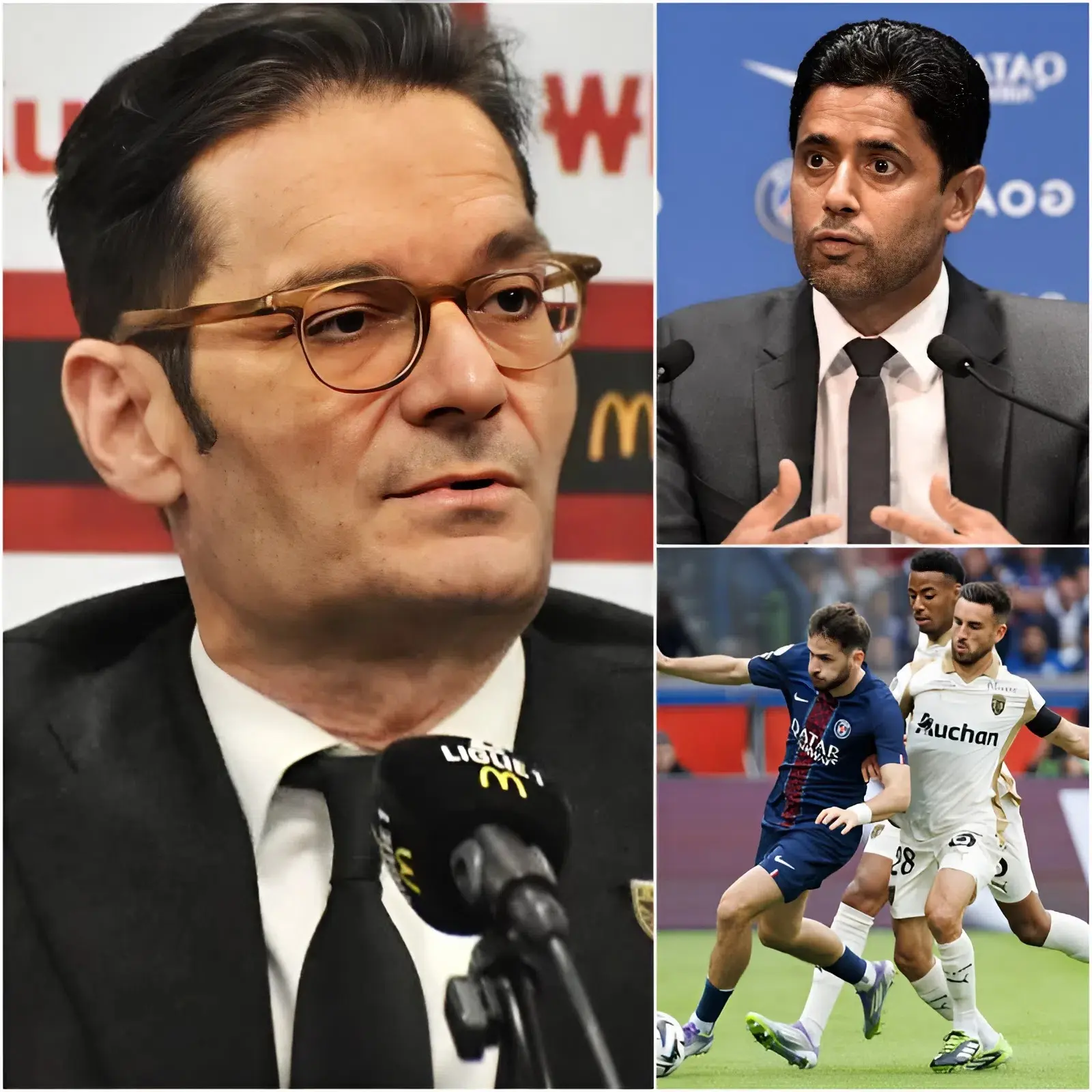
Oughourlian’s comments came during a press conference in which he detailed several instances where refereeing calls and league rulings allegedly favored PSG. He insisted that these patterns undermine the competition’s integrity, adding that while Lens works hard for every point, PSG benefits from systemic biases that are difficult to challenge effectively.
The Lens president specifically highlighted recent matches where controversial penalties and offside decisions went against his team, suggesting a consistent trend rather than isolated incidents. He stressed that such repeated decisions affect the title race and demoralize players, ultimately harming the league’s credibility and fairness.
In response, PSG President Nasser Al-Khelaifi rejected all allegations, stating that the club’s success is a direct result of investment, talent, and strategic planning. He maintained that any claims of favoritism are unfounded and criticized Lens for attempting to deflect attention from their own performance shortcomings by targeting PSG publicly.
Al-Khelaifi emphasized that PSG has been held accountable for its actions in all league matches and that referees make decisions independently. He insisted that financial backing does not guarantee victories and that Lens, like other clubs, must compete on merit. His remarks sought to defend PSG’s reputation while undermining Oughourlian’s credibility.
The confrontation quickly escalated on social media, with fans and pundits weighing in. Supporters of Lens expressed outrage at perceived injustices, while PSG fans defended their team’s accomplishments, arguing that wealth alone cannot secure consistent top-tier results. The debate highlighted the emotional intensity surrounding Ligue 1’s title race.
Journalists also analyzed the comments, noting that such public disputes between club presidents are rare in French football. Analysts suggested that while Oughourlian’s criticism may resonate with frustrated supporters, it could also backfire by portraying Lens as a club that cannot handle pressure without externalizing blame.
The controversy comes as both clubs are engaged in a fierce battle for the Ligue 1 title. PSG has historically dominated the league, thanks to substantial investment in world-class players and infrastructure. Lens, however, has been outperforming expectations this season and aims to challenge the established hierarchy, which adds context to Oughourlian’s pointed remarks.
Refereeing standards in Ligue 1 have been debated for years, but accusations of systemic favoritism toward PSG intensify the scrutiny. Critics argue that repeated high-profile controversies involving PSG create perceptions of bias, regardless of the league’s actual neutrality. The conversation now extends beyond individual matches to the overall governance of French football.
Fans have begun organizing discussions online, comparing video evidence from multiple games and debating whether decisions consistently benefit PSG. This grassroots analysis demonstrates the modern fan base’s influence in shaping perceptions of fairness and accountability in football, especially when club presidents make explosive public statements.
The Ligue 1 administration has yet to respond formally, though league officials have historically maintained that referees operate independently. Any formal inquiry into Oughourlian’s claims could have far-reaching implications for the competition and may set a precedent for how similar disputes are handled in the future.
Meanwhile, Lens players have remained mostly silent, focusing on training and upcoming matches. Team captains have emphasized that their performance on the field is the only factor within their control and that they will continue to fight for results regardless of public criticism or off-field controversies.
PSG’s players also avoided direct engagement with the debate, maintaining a professional focus on preparation for fixtures. Their approach contrasts with the off-field drama, highlighting how management and leadership can shape public narratives independently from team performance.
The media has compared this feud to previous disputes in European football, noting that rivalries often intensify when financial inequalities exist. Ligue 1 is not unique in this regard, but the explicit statements by Oughourlian add a rare level of personal confrontation between club executives in French football history.
Observers have pointed out that Lens’ challenge to PSG represents a broader narrative of underdog teams seeking to hold wealthy, dominant clubs accountable. Oughourlian’s comments can be interpreted as a strategic move to rally supporters and create pressure on both the league and referees to enforce a stricter sense of equity.
Al-Khelaifi’s counterstatements serve to protect PSG’s brand and maintain confidence among sponsors, players, and international supporters. The president’s swift rebuttal underscores the importance of public perception and highlights the high stakes involved when financial power, media attention, and competitive outcomes intersect in professional football.
As the season progresses, every match involving PSG and Lens will be under intense scrutiny. Analysts predict that refereeing decisions will be dissected meticulously by both clubs and their supporters, and each controversial call could be used as ammunition in the ongoing debate over fairness and league integrity.
Ultimately, the clash between Oughourlian and Al-Khelaifi reflects deeper tensions in football, where financial disparities, governance, and public narratives intertwine. Ligue 1 may need to address these structural concerns to prevent further conflicts and maintain credibility as a competitive and fair league.
The fan response continues to shape the story, demonstrating how football culture extends beyond the pitch. Social media campaigns, opinion pieces, and televised debates have all amplified the controversy, ensuring that discussions about favoritism and competitive balance will remain central topics in French football for months to come.
As both clubs focus on their campaigns, the off-field drama adds an additional layer of pressure. Every decision, transfer, or tactical choice is scrutinized in the context of perceived favoritism, affecting how players, management, and fans interpret the unfolding title race.
This ongoing feud highlights the intersection of wealth, power, and sport. PSG’s financial resources, Lens’ underdog status, and public scrutiny create a compelling narrative that will continue to dominate discussions in Ligue 1. Observers will be watching carefully to see how both clubs navigate these challenges without letting controversy overshadow football itself.
The Lens-PSG tension also raises questions about referee accountability and league governance. How Ligue 1 addresses these issues may influence not only the current season but also the credibility of the league in future competitions. Transparency and clear communication could be key in maintaining trust among clubs and supporters.
With weeks remaining in the season, every point matters. The outcome of the title race is still uncertain, but the public feud between the club presidents adds an enduring subplot that ensures fans, media, and stakeholders remain deeply engaged. The battle on and off the pitch exemplifies the high stakes of modern professional football.
In conclusion, the accusations from Lens’ president and PSG’s rebuttal have ignited a debate that transcends simple match results. This confrontation illuminates issues of financial influence, competitive fairness, and transparency in Ligue 1, providing a dramatic narrative that captures the attention of the football world both in France and internationally.