
After the Blues’ unexpected qualification for the quarter-finals of the 2026 World Cup, a match which ended in a narrow 1-0 victory against Paraguay, international public opinion fractured around the performance of Uzbek referee Ilgiz Tantashev. This round of 16, played on July 4, 2026 at Lincoln Financial Field in Philadelphia, was marked by extreme tension, repeated fouls and controversy over the refereeing.
The French, European media and even some international observers described Tantashev’s performance as a “catastrophe” or “disaster”, while the Paraguayan press hailed it as “correct and sober”. In this context of explosion of criticism, the referee himself reacted firmly, affirming that his decisions were “totally fair and in accordance with the regulations”. His words, relayed in the aftermath, provoked a new wave of reactions, some even accusing Paraguay and its supporters of having only criticized the bitter defeat.
This article analyzes the contours of this controversy, the facts of the match, the positions of the actors and the lessons of a collective questioning.
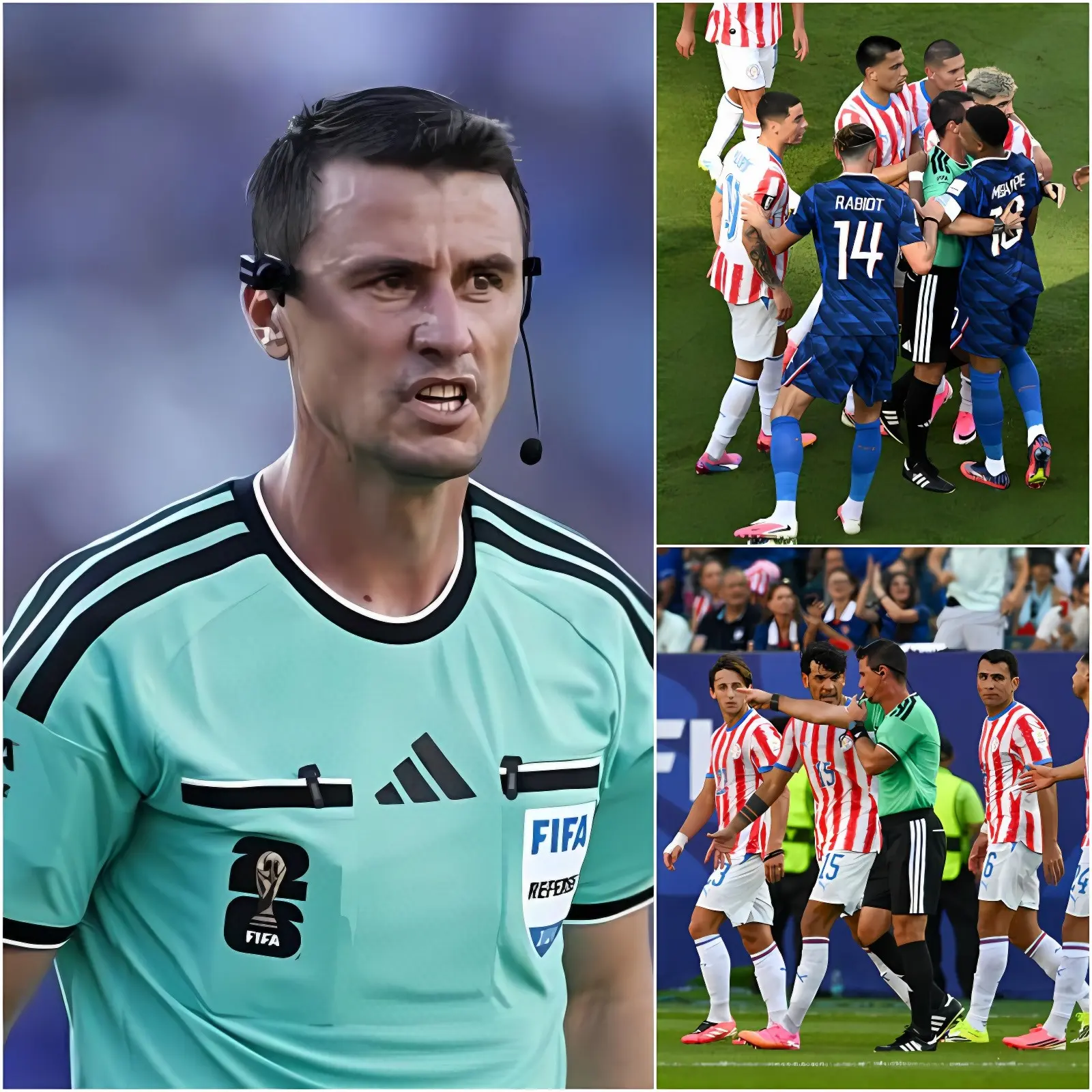
Refereeing a World Cup match, especially in the final phase, requires a delicate balance between respecting the laws of the game, managing intensity and preserving the integrity of the spectacle. Tantashev, a FIFA international officer for thirteen years, has led major matches such as those of the Asian Champions League or the Paris 2024 Olympic Games. But this first participation in a World Cup revealed visible flaws.
From the first minutes, the Paraguayan players increased the number of mistakes, provocations and violent actions, a typical Albirroja style that the Blues were able to contain without retaliating violently. However, yellow cards were sorely lacking on the South American side. No Paraguayans were warned, while three French people – including Olivier Giroud and other key players – were sanctioned.
Media outlets like L’Équipe gave the referee a catastrophic rating of 1/10, calling him “the worst performance of the World Cup,” while Le Figaro spoke of “completely outdated refereeing” and a “Paraguayan trap” that fell into the eye of the algorithm. Keith Hackett, a former Scottish referee, was even more scathing: “He was way out of his depth. »
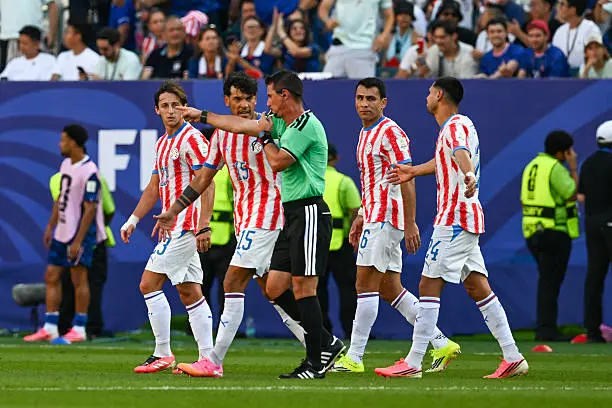
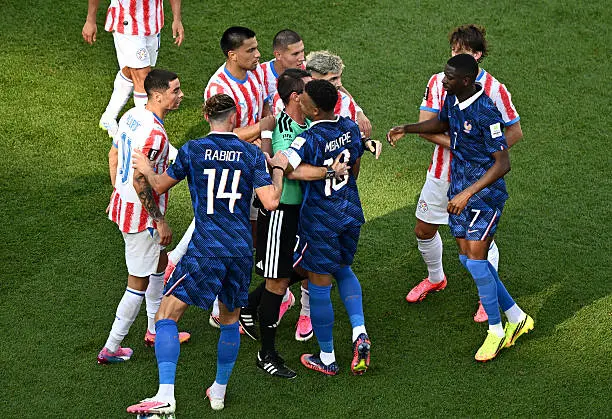
These critiques were not free. The match saw several serious incidents. In the first period, a violent melee broke out after a foul on Kylian Mbappé, followed by a push from the Frenchman. Fights also broke out during the second half’s hydration break and at the final whistle, with Paraguay’s Gustavo Velázquez separated from his opponents. Observers have pointed out the absence of cards for the repeated mistakes of the Albirroja, often committed as a traitor or in simulation.
Désiré Doué, one of the main French players, was the victim of a foul on a touchline, triggering a controversy over the penalty awarded by Tantashev after intervention by the VAR. The referee initially allowed play, then revised his decision at the request of the center screen. The Paraguayan confirmed: “I saw the action on the VAR screen, I was behind the referee and I cannot be objective. » This decision, considered fair by many experts, was not enough to calm people’s minds.
William Saliba, AS Roma defender, regretted: “I think the referee could have given a few yellow cards, that might have calmed them down a little. » Rayan Cherki, from Manchester City, was more acerbic: “How many fouls? Thirty, forty? No yellow card for Paraguayan players? It doesn’t matter, we’re in the quarter-finals. »
Conversely, the Paraguayan view was radically different. ABC Color, the main local daily, described Tantashev’s performance as “solid and serene”. He would have let the game express itself while remaining balanced, without major incidents apart from the crucial penalty for France. The President of the Republic of Paraguay, Santiago Peña, even declared a public holiday the following day to celebrate the team’s achievement. Coach Gustavo Alfaro refused to criticize the referee: “I cannot be objective.
» This cultural and media divergence underlines a fundamental point: refereeing is perceived differently depending on the camp. For French supporters, accustomed to firmer direction, the silence of the Paraguayan cards seemed like a professional error. For the Albirroja and their entourage, it was a measured application of South American “fair play”, symbol of a physical and provocative style of play. As one international commentator noted, Paraguay did not “play clean”, but neither did the referee “send everyone to the hospital” as Zlatan Ibrahimovic would have liked.
Ilgiz Tantashev, aged 42, is a discreet and methodical referee. Originally from Bukhara, Uzbekistan, he began his career directing children’s games in a garage before turning to the whistle. Injured in the thigh during his attempt at a playing career, he explained in a podcast that he understood that he would not be professional. His philosophy is clear: “My style adapts to each match, I am not rigid. I try to understand what the players want and to preserve the eleven against eleven game.
You have to know how to read the match and the intentions behind a foul. » In the Paris Olympics, he had already warned the simulators, saying that he would check with the VAR. This same spirit of vigilance would have been necessary here, where Paraguayan provocations were commonplace. However, faced with the wave of criticism, Tantashev chose a firm response.
According to sources relayed by the international press, he declared that all his decisions were “totally fair and in accordance with the regulations”, while suggesting that the majority of the protests came from frustration linked to the defeat rather than from a factual reality observed on the ground. This position, far from being a direct provocation towards Paraguay, was interpreted by some as an appeal to reason: if Paraguayan supporters or their media attack the referee, they had better question the facts themselves.
This media and public explosion raises broader questions about the nature of criticism in sport. In a context where social networks amplify every gesture, every mistake and every controversial decision, the referee becomes the easy scapegoat. The Blues were able to contain the game without losing control, but they paid the price for management perceived as too lenient. Refereeing is evolving: with omnipresent VAR, errors are less forgivable, and fans’ expectations are higher.
However, as noted by former referee Tony Chapron, cited by several media, Tantashev sometimes lacked firmness, seeming to “endure” the match rather than direct it. Experts like Bruno Derrien, a former international referee, pointed out that the Uzbek official could have calmed things down with a few cards. But would such an approach have changed the result? The penalty on Doué, if it had been refused, would perhaps have had another name for the match. The French victory, thanks to Mbappé, remains deserved, but the refereeing left its mark.
The controversy goes beyond the numbers of yellow cards. It touches on the perception of South American football, often accused of “dirty games” in the World Cup. Paraguay, eliminated by a goal, lost the lead at the end of the match, causing post-whistle tensions. Paraguayan supporters, on the networks, massively supported their team and criticized the referee, pointing out a European “injustice”. Tantashev himself, in a widely relayed statement, suggested that most of the voices were raised from frustration at defeat rather than from objective observation.
This remark, which immediately sparked a new wave of reactions, was seen by some as a way of putting anger into perspective: if the criticism came only from the defeat, then the debate on the ground would lose its relevance. For others, it was an implicit challenge to Paraguay, which could see this position as interference. Whatever the case, this reaction fueled the debate: the referee, instead of remaining silent, took responsibility for his choices.
Beyond this affair, she reminds us that arbitration is never neutral. It reflects cultural contexts, public expectations and sporting issues. In 2026, with an expanded World Cup, the matches are more intense, the players more experienced and the fans more vocal. Should FIFA strengthen referee training, increase the number of assistants or clarify sanction standards? Tantashev, despite his reputation for moderation, showed his limits when faced with a style of play that “eluded him”.
The French players praised their team’s ability to remain calm in the face of provocations. Mbappé, Barcola, Cherki and Deschamps all denounced a “dirty” match and “treacherous moves”, but without calling into question the result. The coach underlined the resilience: “We played, we won. »
This controversy did not prevent France from qualifying for the quarter-finals, where they will potentially face Morocco. But it poses a lingering question: in a sport where verbal and physical violence is commonplace, how do we balance justice and spectacle? The criticisms of Tantashev, far from being unfounded, have forced reflection. As the referee suggested, those who speak vehemently had better question themselves.
Not on the reality of the facts, undoubtedly, but on the emotional context of the defeat, on the collective management of tensions and on the place of the South American player in a European World Cup. Football, in essence, is a sport of facts, not feelings. And in this matter, the truth, as always, remains subjective.
To conclude, the controversy surrounding the Ilgiz Tantashev refereeing at the France-Paraguay match perfectly illustrates the challenges of modern. With a rating of 1/10 for the French media, a Paraguayan silence greeted locally and a firm reaction from the referee, the debate went beyond the Philadelphia field. It touches the very essence of sport: how to whistle an intense match without losing control? How to satisfy demanding fans while respecting the rules? Tantashev, affirming that his decisions were consistent, recalled that arbitration is not a question of popularity, but of rigor.
Critics point out that sport, beyond results, is also a mirror of societies. In this sense, France showed that it could win without letting itself be dictated by frustration, just as the referee could be challenged without breaking down. It remains to be seen whether this affair will open up broader reflection on the training of officials and the culture of fair play in world football. For now, one more match, one more controversy, and a World Cup which continues its course.