
The landscape of international football has always been defined by the delicate balance between honoring legendary legacies and embracing the inevitable necessity of evolution. For the Portuguese national team, this balance has centered almost exclusively on Cristiano Ronaldo for the better part of two decades. However, as the global football community sets its sights on the 2026 FIFA World Cup, a profound and quiet shift appears to be taking place within the upper echelons of the Seleção’s leadership.
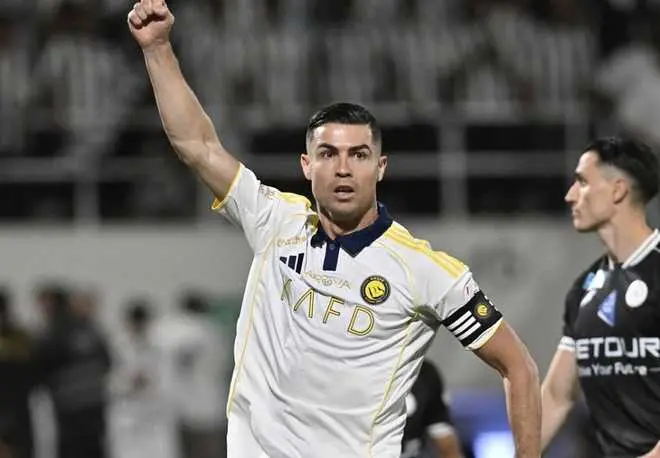
Roberto Martínez, the tactical architect currently at the helm of the Portuguese squad, has recently offered a series of observations that have sparked a sophisticated debate regarding the criteria for elite international selection. At the heart of this discourse is not a questioning of Ronaldo’s undeniable talent or his historic contributions, but rather a pragmatic analysis of the competitive environment in which he currently operates and its compatibility with the rigors of the world’s most demanding tournament.
The core of the matter, as articulated through recent tactical briefings and internal discussions, lies in the perceived disparity between the intensity of the Saudi Pro League and the atmospheric pressure of a World Cup campaign. Roberto Martínez has approached this topic with the characteristic nuance of a modern manager, avoiding the pitfalls of sensationalism while addressing the biological and professional realities of aging in professional sports.
The manager’s perspective is grounded in a simple yet challenging premise: to win a World Cup in 2026, a team needs every individual to be performing at a physiological and mental peak that is fostered only by consistent, week-in-week-out competition against the world’s most elite defensive structures. In Martínez’s view, while the league in Saudi Arabia has made monumental strides in visibility and investment, it may not yet provide the “high-performance crucible” necessary to maintain a player—even one as disciplined as Ronaldo—at the specific level required to overcome the tactical sophistication of European and South American giants.
This assessment is not a dismissal of Ronaldo’s individual efforts. Indeed, the Portuguese captain remains a marvel of physical conditioning, often outperforming players a decade his junior in fitness tests. Yet, Martínez’s concern is more subtle; it is about the “rhythm of crisis.” In elite European leagues, players are subjected to tactical puzzles and physical duels that require split-second decision-making under duress for ninety minutes.
There is a fear that if the domestic environment does not consistently demand this level of intensity, the “competitive muscle memory” might slightly dull, making it difficult to suddenly upshift when facing a high-pressing France or a transition-heavy Brazil. The manager has suggested that for Portugal to realistically aim for the trophy that has eluded them for so long, the priority must shift toward players who are immersed in the relentless, high-octane environments of the Premier League, La Liga, or the Bundesliga, where the margin for error is non-existent.
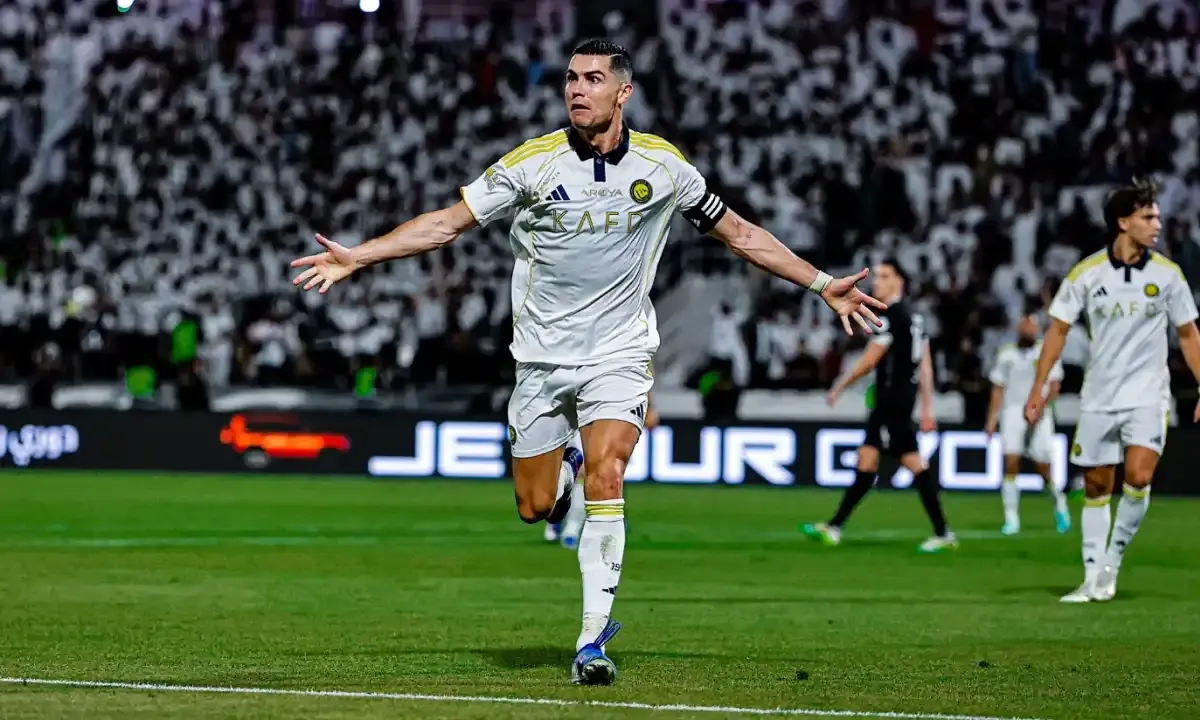
The fallout from these observations has been felt deeply within the Portuguese camp. While Martínez has publicly maintained a respectful stance, emphasizing that the door is never truly closed on a player of Ronaldo’s stature, the internal messaging has been more focused on the collective future. The emergence of a new generation of Portuguese talent—players like Rafael Leão, João Félix, and Gonçalo Ramos—provides Martínez with a versatile toolkit that allows for a more fluid, high-pressing system.
This system, by its very nature, requires a specific type of defensive work rate from the forward line that is difficult to sustain for any player in the twilight of their career, regardless of their past achievements. By prioritizing younger players who are currently being forged in the fires of the Champions League, Martínez is attempting to build a squad that relies on collective synergy rather than individual brilliance.
However, the narrative took a more complex turn when reports surfaced of a “true reason” behind the potential snubbing of the legendary number seven. According to a player within the inner circle of the national team, the tension is not merely about the quality of the Saudi Pro League, but about the tactical rigidity that Ronaldo’s presence often imposes on the team. The source suggested that when Ronaldo is on the pitch, there is an unspoken, gravitational pull that forces the entire tactical setup to revolve around him.
For Martínez, who envisions a more decentralized and unpredictable attacking force, this “Ronaldo-centricity” is seen as a tactical limitation. The manager reportedly believes that the 2026 World Cup will be won by teams that can attack from multiple angles and maintain a high-intensity press for 120 minutes if necessary. In this vision, the “priority” must be the system, and if the league a player competes in does not prepare them for that specific system, their inclusion becomes a strategic risk.
The reaction from the fans has been a mixture of pragmatic acceptance and fierce loyalty. To many, Ronaldo is more than a player; he is the embodiment of Portuguese pride. The idea that his domestic league choice could disqualify him from a final shot at World Cup glory feels to some like an unfair penalty for his role as a pioneer in a new footballing frontier. Yet, there is a growing segment of the supporters who recognize the logic in Martínez’s stance.
They see the 2026 tournament as perhaps Portugal’s best-ever chance to win, given the depth of the current roster, and they understand that sentimentalism can often be the enemy of success in high-stakes sports. The anger mentioned in various reports often stems from the perceived lack of transparency—the feeling that a legend is being phased out through tactical justifications rather than a direct conversation about the end of an era.
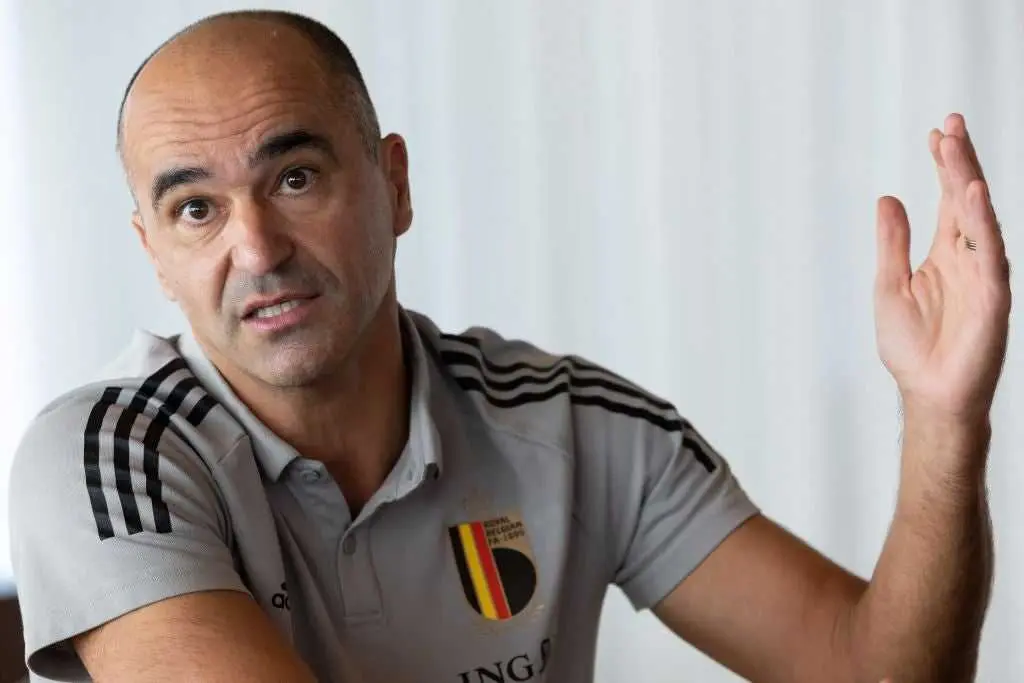
Martínez’s challenge is now one of diplomacy and results. If he proceeds with a younger, “high-intensity” squad and succeeds, his decision will be hailed as a masterstroke of brave leadership. If the team falters, the shadow of Ronaldo will loom larger than ever, and the criticisms regarding the dismissal of the world’s greatest goalscorer will be deafening. The manager is essentially gambling on the theory that domestic competition quality is the primary predictor of international success. It is a theory that has been tested before, but never with a subject as extraordinary as Cristiano Ronaldo.
The striker’s own response to these developments will be equally crucial. Known for his insatiable desire to prove doubters wrong, Ronaldo may use the perceived “snub” as motivation to elevate his own performance levels to a point where Martínez can no longer ignore him, regardless of where he plays his club football.
Ultimately, this situation reflects the broader evolution of the sport. Football is increasingly becoming a game of data, metrics, and physical outputs. In this new world, even the most legendary figures are subject to the cold hard facts of “performance windows” and “competitive intensity ratings.” Roberto Martínez is not acting out of malice or a desire to court controversy; he is acting as a technician who has been tasked with a singular, immense goal: bringing the World Cup to Lisbon. To do that, he believes he must prioritize a squad that is battle-hardened in the world’s most relentless leagues.
Whether the Saudi Pro League can bridge that gap in time for 2026 remains to be seen, but for now, the manager’s priority seems firmly set on a future that embraces the energy of the youth over the echoes of the past.
As the road to 2026 continues, the dialogue between the manager and his most famous player will likely define the soul of the Portuguese team. It is a story of a coach trying to build a machine and a legend trying to prove he is still the most vital part of it.
The fans may be fuming, the media may be speculating, and the players may be revealing secrets, but the underlying truth remains: in the pursuit of the World Cup, there are no easy decisions, and there are no players—not even Cristiano Ronaldo—who are exempt from the relentless demands of the modern game. Martínez has set his course, believing that the peak of the mountain requires a level of preparation that only the highest tiers of football can provide.
Whether this path leads to a trophy or a tragic conclusion for a national hero is a question that will only be answered on the pitches of North America.
What do you believe is more important for a national team manager: the historical winning instinct of a veteran or the current high-intensity match fitness of a younger player competing in a top-tier league?