
The 2026 FIFA World Cup has already delivered unforgettable football moments, but few stories have generated as much controversy as the aftermath of England’s 2-0 victory over Panama. Soon after the final whistle, reports began circulating that Panama head coach Thomas Christiansen unleashed a furious criticism of the officiating team, accusing them of favoring England throughout the match. His alleged remarks quickly spread across social media, fueling heated debates among supporters from both nations. However, despite the emotional headlines, there has been no verified evidence confirming that Christiansen made every statement attributed to him, making the controversy even more intriguing.
England entered the match as clear favorites and ultimately secured a professional 2-0 win through disciplined defending, effective midfield control, and clinical finishing. Panama showed determination throughout the contest but struggled to create consistent scoring opportunities against England’s organized back line. While the result itself was not entirely surprising, attention rapidly shifted away from the football and toward the dramatic accusations that emerged after the match, overshadowing what had otherwise been another important victory for Gareth Southgate’s side.
According to widely shared online claims, Christiansen allegedly accused the match officials of ignoring repeated fouls committed by England defender Jarell Quansah and several of his teammates. The Panama coach was quoted as saying that the referees had created an uneven playing field and that his players had been denied fair treatment from the opening whistle until the final minutes. The alleged comments painted a picture of overwhelming frustration after what he believed had been a one-sided display of officiating rather than a contest decided solely by footballing quality.
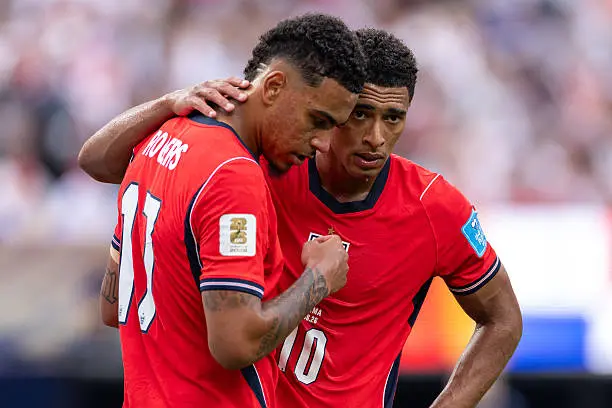
The controversy intensified when Christiansen was reportedly quoted making an even more explosive allegation. He allegedly declared, “If they want England to win at all costs, then they might as well hand them the trophy now instead of making us play these meaningless matches,” before reportedly adding that “England has bought everyone with money and power.” Those words immediately became the focus of countless online discussions because they suggested far more than simple dissatisfaction with refereeing decisions. However, no official press conference transcript or verified recording has confirmed that these exact statements were actually made.
One of the biggest secrets behind the rapidly spreading controversy was not what happened during the match itself but how quickly unverified claims transformed into accepted facts across social media platforms. Within minutes, edited videos, translated captions, and dramatic headlines began circulating worldwide, often repeating the alleged quotes without identifying an original source. Digital media experts frequently warn that emotionally charged statements can spread faster than official clarifications, particularly during major sporting tournaments where millions of fans are already emotionally invested in every result.
While speculation continued to dominate headlines, England’s players reportedly remained focused on their own performance rather than responding emotionally to the accusations. Several members of the squad were seen celebrating the victory with supporters before returning to the dressing room. Coaches emphasized discipline throughout the tournament, encouraging players to avoid becoming distracted by outside noise. That approach reflected England’s broader strategy of maintaining composure regardless of criticism, recognizing that every successful team inevitably attracts intense public scrutiny during the World Cup.
The story took another dramatic turn when reports claimed that, roughly ten minutes after the alleged comments surfaced, Morgan Rogers calmly addressed the controversy. Unlike the emotional reactions appearing across social media, Rogers was portrayed as speaking with remarkable composure and respect. According to those reports, he neither insulted Panama nor criticized Christiansen personally. Instead, he reportedly emphasized that players can only control their own effort on the pitch and that refereeing decisions are ultimately outside the control of either team, regardless of the final outcome.
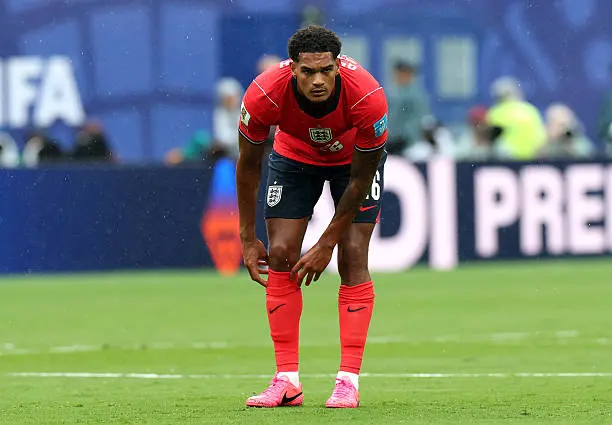
Another detail that quickly attracted attention was the claim that Rogers’ measured response surprised not only Christiansen but also members of the Panama squad. Witnesses allegedly described a brief exchange in which Rogers acknowledged Panama’s fighting spirit while defending England’s professionalism. According to the unverified accounts, he reportedly stated that every tackle, challenge, and decision should be evaluated objectively rather than emotionally after defeat. His composed tone was said to have contrasted sharply with the heated atmosphere surrounding the post-match discussion.
Behind the scenes, those familiar with international football understand that emotions often run extremely high immediately after knockout-stage matches or crucial group-stage encounters. Coaches invest months preparing for tournaments, and players sacrifice years chasing the opportunity to compete on football’s biggest stage. When controversial refereeing decisions appear to influence momentum, frustration can easily spill into post-match interviews. That emotional reality helps explain why dramatic stories frequently emerge after important fixtures, even when many details remain impossible to verify during the first hours following the final whistle.
The broader football community responded with mixed opinions as analysts reviewed video footage from the match. Some observers argued that several physical challenges deserved closer examination, while others believed the referee maintained a consistent standard throughout the game. Former players appearing on television panels generally agreed that disagreements over officiating are common at every World Cup. However, many also cautioned against making allegations involving corruption or deliberate bias without presenting clear and convincing evidence capable of supporting such serious accusations.
Football governing bodies have long emphasized the importance of protecting both match officials and participants from unfounded allegations. Referees are regularly assessed after every international fixture, with multiple camera angles and independent evaluations used to review significant decisions. Although mistakes are acknowledged as part of the human element within football, governing organizations consistently reject claims of organized favoritism unless supported by substantial evidence. That principle remains essential for maintaining trust in international competitions watched by billions of supporters around the world.
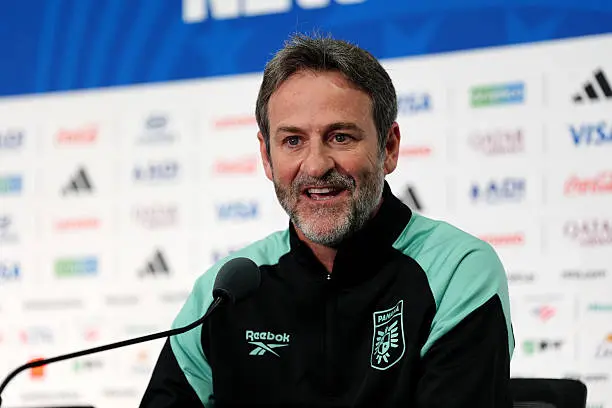
The hidden lesson emerging from this controversy may have less to do with England or Panama than with the modern media landscape itself. Major sporting events now unfold simultaneously on television, social media, and countless digital platforms where information travels almost instantly. Rumors often receive millions of views before journalists have an opportunity to verify their accuracy. As a result, fans increasingly face the challenge of separating confirmed facts from emotionally appealing narratives that spread because they generate engagement rather than because they have been independently verified.
Regardless of the controversy, England’s victory strengthened their position in the tournament and reinforced expectations that they could make another deep World Cup run. The squad demonstrated tactical organization, defensive discipline, and attacking efficiency throughout the match. Panama, meanwhile, earned praise for their resilience despite the disappointing result. Their players continued fighting until the final whistle, reflecting the determination that has defined the national team throughout recent international competitions and earning respect from neutral supporters despite the defeat.
As debate surrounding the alleged comments continues, the most important takeaway remains the distinction between verified information and viral speculation. If official recordings, transcripts, or governing body investigations eventually confirm the reported statements, the football world will undoubtedly examine them carefully. Until then, many of the most dramatic claims surrounding Thomas Christiansen and Morgan Rogers should be treated cautiously. What is beyond dispute is that the match produced not only an important result on the pitch but also a powerful reminder of how quickly modern football stories can evolve into global controversies before all the facts become available.