
In the tense aftermath of England’s goalless draw against Ghana at the 2026 FIFA World Cup, the dressing room harmony that Thomas Tuchel had worked so hard to build appears to be fracturing. What should have been a night of solid progress following a strong opening victory over Croatia has instead descended into public discord, with Arsenal star Bukayo Saka delivering unusually blunt criticism of a senior teammate. The comments, made in a heated post-match interview, have sent ripples of shock through the English football community and raised serious questions about squad unity heading into the decisive group-stage fixtures.
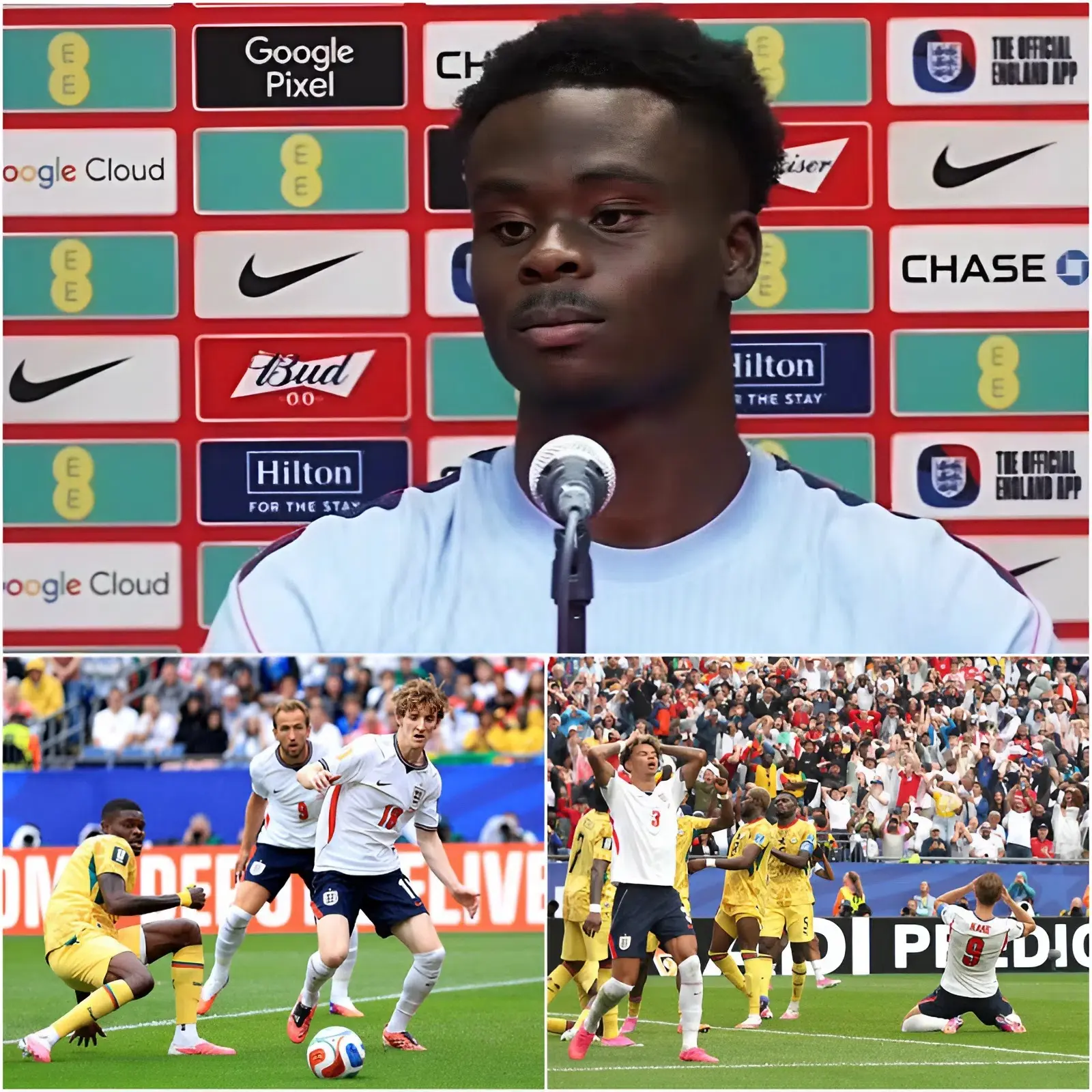
Saka, who was one of England’s brightest performers in the 0-0 stalemate, did not hold back when addressing the media. “I would rather sit on the bench than play alongside him,” the 24-year-old winger stated, his frustration evident. He went on to accuse the unnamed player — widely reported to be one of England’s most iconic and highest-profile attackers — of ignoring team instructions, adopting an overly individualistic approach, and repeatedly refusing to release the ball despite clear options.
According to Saka, he signaled for passes on at least five separate occasions during promising attacking phases, only to be ignored as the player opted to shoot or dribble into crowded areas.
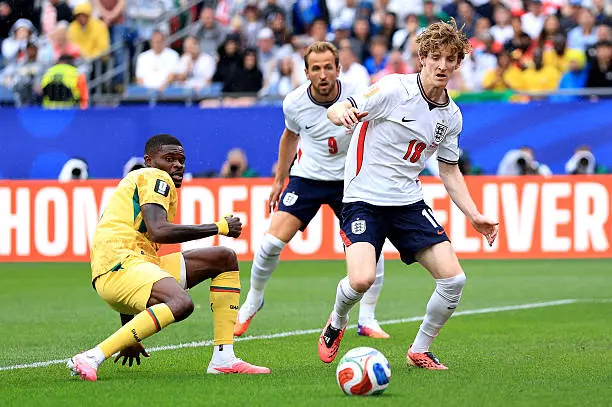
The match itself followed a familiar pattern for England under Tuchel: heavy dominance in possession (over 75%), multiple clear-cut chances, and yet no reward on the scoreboard. Ghana defended resolutely in a compact 5-4-1 shape, frustrating the Three Lions’ attacking intent. While Declan Rice and Jude Bellingham worked tirelessly to control midfield, England’s final-third execution was lacking. Several opportunities, particularly on the right flank where Saka operated, broke down due to poor decision-making. Insiders now claim that the player Saka targeted was central to many of those breakdowns.
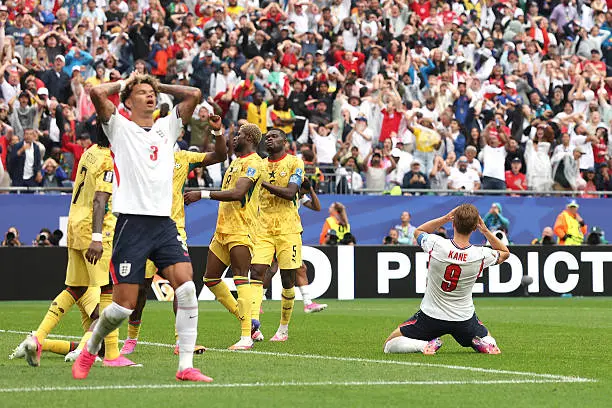
Speculation has intensified around the identity of the criticized star. Given the description of a “biggest star” whose involvement no one expected to be questioned, many point to captain Harry Kane as the likely figure. The Tottenham striker, who has been England’s talisman for nearly a decade, endured a difficult evening. He was isolated at times, dropped deeper than planned in search of the ball, and took several shots from suboptimal positions.
Sources within the camp suggest Kane’s insistence on holding possession to create his own chances clashed with Tuchel’s pre-match emphasis on quick, fluid combination play involving Saka, Phil Foden, and the overlapping full-backs.
Saka’s outburst reflects deeper tactical frustrations. Before the game, Tuchel had stressed the importance of exploiting width and making quick decisions in the final third to break down low blocks. “We had clear plans,” Saka explained. “We worked on it all week — movement, one-twos, getting me into pockets. But when I made the runs and called for it, the ball just didn’t come. It ruined everything we prepared.” His comments paint a picture of a player feeling marginalized despite his dynamic runs that stretched the Ghanaian defense on multiple occasions.
The timing of Saka’s remarks adds another layer of drama. They come shortly after reports of Declan Rice requesting a private meeting with Tuchel to address performance issues and team discipline following the draw. Rice, ever the professional, had publicly called for positivity and recovery, but privately appears to have echoed concerns about individualism undermining collective efforts. The Arsenal connection between Rice and Saka is notable, and their alignment on squad standards could influence Tuchel’s handling of the situation.
This is not the first time internal tensions have surfaced in major tournaments, but the public nature of Saka’s criticism is rare for the typically measured England setup. The 2026 World Cup, hosted across North America, brings added scrutiny with large crowds and global media attention. A draw against Ghana, while not disastrous, leaves England needing positive results against Panama to secure comfortable progression. Any lingering dressing-room rifts could prove costly in high-pressure knockout matches.
Tuchel, known for his no-nonsense approach and tactical rigidity, faces a delicate balancing act. In his post-match press conference, the German coach acknowledged “individual mistakes” without naming players but stressed that “the team comes first — always.” He is expected to hold clear-the-air talks in the coming days. Excluding a player of Kane’s stature would be seismic, yet continuing with unresolved issues risks further discord. Previous England coaches have dealt with similar ego clashes, but few have had to manage them so publicly during a World Cup campaign.
For Saka, the comments mark a significant evolution in his role within the squad. Once seen as a talented but quiet youngster, he has grown into a leader at Arsenal and is now asserting himself on the international stage. His club form has been exceptional, with goals, assists, and relentless work rate making him indispensable. On the night against Ghana, Saka created several chances and delivered dangerous crosses, only to see them wasted. His visible frustration — including gestures on the pitch that cameras captured — boiled over afterward.
The player in question, if indeed Kane, brings a complex dynamic. As England’s all-time leading scorer in major tournaments, his experience and goal threat remain unmatched. However, critics have noted occasional selfishness in possession, a trait that can be an asset when clinical but a liability against organized defenses. Ghana’s goalkeeper and backline were outstanding, but England’s wastefulness in key moments amplified the issue. Kane’s limited service from midfield, partly due to Rice’s deeper role and Bellingham’s forward surges, may also have contributed to his isolation.
Broader implications for England’s tournament revolve around squad harmony. The Three Lions have talent in abundance, but chemistry is essential. The opening 4-2 win over Croatia showcased attacking flair, yet the Ghana stalemate exposed vulnerabilities in finishing and decision-making. Saka’s intervention could serve as a catalyst for improvement or deepen divisions. Fans on social media are split: many defend Saka’s honesty and desire for collective success, while others worry it could unsettle the captain and affect morale.
Looking ahead, preparation for Panama will be intense. Tuchel is likely to review footage, conduct one-on-one meetings, and possibly adjust the attacking structure. Promoting younger or more team-oriented options in attack could be considered if tensions persist. Rice’s leadership, already pivotal, will be tested further as he helps mediate or reinforce standards. His own performance against Ghana — high touches, accurate passing, and late-game push — positioned him as a steadying influence.
Ghana, for their part, celebrated the point as a moral victory. Their disciplined setup and counter-attacking threat frustrated a favored England side. Coach of the Black Stars praised his players’ organization, noting how they capitalized on England’s internal frustrations. This result keeps Group L competitive, with every point carrying weight in the expanded format.
The incident highlights the pressures of modern international football. Players like Saka, operating at the highest levels week in and week out, demand high standards. Public criticism is risky but can sometimes clear the air. Whether this leads to reconciliation or further upheaval remains to be seen. England’s depth means options exist, but losing the cohesion built under Tuchel would be a significant setback.
As the squad regroups in their training base, focus turns to mending fences and sharpening clinical edge. Saka’s words, though pointed, stem from a desire to win. He has consistently shown commitment to the national team, and his frustration likely mirrors that of several teammates. The big star at the center of the storm faces a critical juncture: adapt to team needs or risk further isolation.
This episode adds compelling narrative to England’s 2026 World Cup journey. On North American soil, with passionate crowds and intense media coverage, every development is magnified. Supporters hope the drama fuels a stronger response rather than distraction. With knockout stages on the horizon, unity will be the ultimate test.
Tuchel’s experience in managing big personalities from his club career will be invaluable. His tactical acumen remains high, but people management now takes center stage. The coming days will reveal whether Saka’s bold stance strengthens or strains the group. For now, the football world watches closely as England navigates this unexpected storm following a night when dominance failed to deliver victory.
The draw against Ghana was meant to be a stepping stone. Instead, it has exposed cracks that demand immediate attention. Bukayo Saka has spoken his mind, and the response from within the camp will define England’s tournament trajectory. In a competition where margins are razor-thin, internal harmony could prove as decisive as any tactical masterclass.