
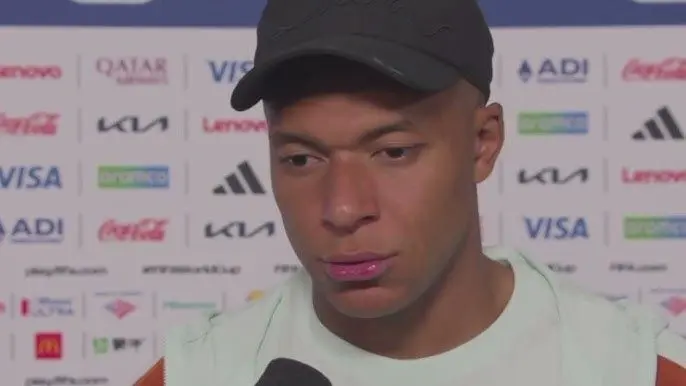
The tension was palpable in the corridors of the Munich stadium, just a few minutes after the final whistle which sealed the fate of the France team in this competition. Eliminated at the gates of the final after a defeat against Spain, the Blues not only expressed the sadness of a missed opportunity, but also a deep bitterness in the face of refereeing decisions deemed inconsistent. It was the French captain, Kylian Mbappé, who expressed this collective frustration with rare and impactful frankness. His words, heavy with meaning, resonated well beyond the mixed zone: “Clearly, Spain was privileged.
» This declaration, far from being a simple quick reaction dictated by disappointment, acted as the detonator of a major institutional crisis, pushing FIFA to react with unusual speed in the face of what promises to be one of the biggest disputes in the modern history of European football.
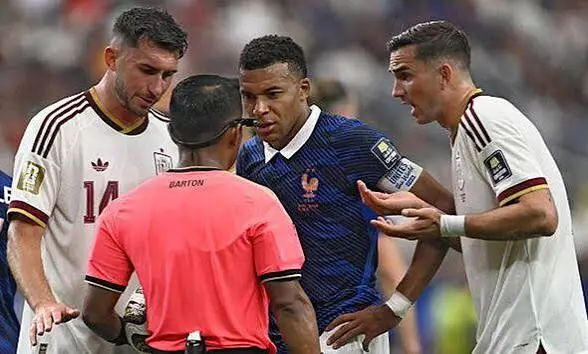
The heart of the controversy lies in the unfolding of the last minutes of a meeting of nevertheless remarkable tactical intensity. While France, trailing two goals to zero, threw its last strength into the battle to try to reduce the score, a succession of refereeing decisions broke the rhythm of the match and systematically disadvantaged the French attackers. Repeated tactical errors by the Spanish defense, not punished by cards which nevertheless seemed obvious, as well as a potential penalty not viewed by the video assistance following a suspicious contact in the penalty area, ended up exasperating the French clan.
For Mbappé and his partners, these incidents were not a simple human error, but a refereeing dynamic which had a disproportionate impact on the outcome of the semi-final.
The impact of these accusations, made by one of the most influential figures in world football, immediately forced the governing bodies to break away from their usual reserve. FIFA, keen to preserve the integrity of its competitions and to put an end to any suspicion of systemic bias, announced the opening of an in-depth and urgent internal investigation into the actions of the refereeing body during this meeting.
According to sources close to the organization, material evidence, including audio recordings of conversations between the central referee and the VAR booth as well as multi-angle analyzes of contested phases of play, have already been compiled. The officials designated for this match were formally summoned to an emergency meeting at the institution’s headquarters in order to explain the consistency of their choices during these crucial minutes.
Such an approach on the part of FIFA demonstrates the seriousness of the situation. Modern football has adopted advanced technologies like VAR precisely to eliminate doubt and guarantee absolute sporting justice. When the protest reaches such a level of institutionalization, the entire credibility of the technological and human system is called into question. The debate is no longer just about the final score of this match, but about how the rules are applied under extreme pressure.
Neutral observers agree that Spain produced very high quality football and fully deserved to lead, but the management of the end of the match by the refereeing body left a shadow of injustice which tarnishes the legitimacy of this triumph.
From a purely logical point of view, the analysis of the disputed decisions shows a blatant asymmetry in the distribution of sanctions. During the last ten minutes, the French team’s rapid transitions were systematically cut off by so-called intelligent mistakes on the part of the Spanish midfielders, without the referee intervening to administratively warn the offending players. This lack of severity allowed Spain to manage the end of the match with physical aggression without risk of exclusion, while the slightest contacts initiated by the French defenders were immediately punished, annihilating any possibility of high pressure.
It is precisely this disparity in treatment which fueled the feeling of two-speed arbitration, pushing Kylian Mbappé to break the usual protocol of respect to denounce what he perceived as preferential treatment.
This controversial elimination marks a brutal end for a French generation which was aiming for a new international coronation. Beyond the sporting disappointment, the affair now takes on a geopolitical dimension within football authorities. The French Football Federation is following developments in the FIFA investigation very closely, hoping to obtain clarifications, failing which it cannot modify a now historic result.
The speed with which FIFA summoned the referees also shows that the institution cannot afford to leave the slightest doubt about the neutrality of refereeing in matches of such scale, where economic and sporting interests amount to hundreds of millions of euros.
As Spain prepares to compete in the final, this administrative investigation will cast an inevitable shadow over the rest of the competition. If FIFA’s findings reveal serious failings or inappropriate behavior on the part of referees, it would open a Pandora’s box of legal recourse and structural reforms to the international refereeing body. For France, the return home took place in an atmosphere of resentment and incomprehension, the players having the feeling of having been deprived of a fair end to the match where raw talent should have been the sole judge of the peace.
Football inevitably emerges weakened from this semi-final. When cutting-edge technology fails to dispel suspicion and the statements of key players call into question the fairness of the competition, it is the contract of trust between the game and its spectators that is threatened. The FIFA investigation must provide clear, transparent and indisputable answers to restore this confidence which is essential to the beauty of sport.
Do you think that the implementation of total transparency, such as the live broadcast of audio discussions between the central referee and the VAR during the match, is the ultimate solution to avoid this type of controversy and guarantee sporting fairness?