
When the final whistle sounded and the Seattle Seahawks stood victorious with a 29–13 win over the New England Patriots in Super Bowl LX, the shockwaves didn’t stop at the scoreboard. Across living rooms, bars, and sports bars nationwide, fans wrestled with the result. But in one corner of the NFL world — far removed from the celebrations and the analysis shows — something far bigger was unfolding behind closed doors.
Robert Kraft, the 84-year-old owner of the New England Patriots and steward of one of the most successful franchises in NFL history, did not leave Levi’s Stadium quietly or with a gracious nod to the victors. Instead, what followed became an uproar that instantly dominated social media, sports talk radio, and every league executive’s inbox.

Kraft was furious. Not merely disappointed, not merely emotional — but incensed. He believed the loss had not just been the result of opposing talent, tactical mismatch, or the ebb and flow of football fortune. He believed something had been taken from his team — and he pointed his ire directly at the referees who officiated the game.
Minutes after the Seahawks celebrated and confetti settled, Kraft was said to have emerged from the Patriots’ locker room with a storm in his eyes, a legal team already in motion, and a single uncompromising belief: that the officials had decided the outcome. What began as disbelief turned into outrage, then into a public ultimatum that the NFL had never before faced.
According to those close to the situation, Kraft authorized what would become a startling escalation: a formal complaint filed with the league demanding an investigation into three of the game’s chief referees, whom he accused of making a series of calls so egregious and decisive that they affected the competitive balance of the Super Bowl itself.

This was not framed as a disagreement over judgment calls. In Kraft’s telling, certain decisions were not merely questionable — they were reckless, inconsistent with standard officiating protocols, and, in his words, “a series of actions that must be explained under oath.”
The complaint, reportedly costing upwards of ten million dollars to assemble and file, didn’t simply register discontent. It requested a full audit of the game’s officiating, interviews with crew members, a review of every controversial call, and a transparent explanation of why certain decisions were reached in the moments that turned the tide.
For a franchise owner who has invested decades cultivating excellence, this wasn’t an idle threat. This was war.
By noon the following day, hot takes exploded across the sports landscape. Some fans rallied behind Kraft, praising his boldness and willingness to stand up for what he believed was fairness, competitive integrity, and respect for his players. Others recoiled, suggesting that no loss — even one as painful as a Super Bowl defeat — justified accusing officials of corruption without incontrovertible evidence.
Analysts clashed on talk shows, with some arguing that the most compelling officiating mistakes of the game did change field position, overturn momentum, and tilt the scales against the Patriots. Others asserted that every NFL contest, especially on the sport’s biggest night, naturally invites second-guessing and scrutiny.
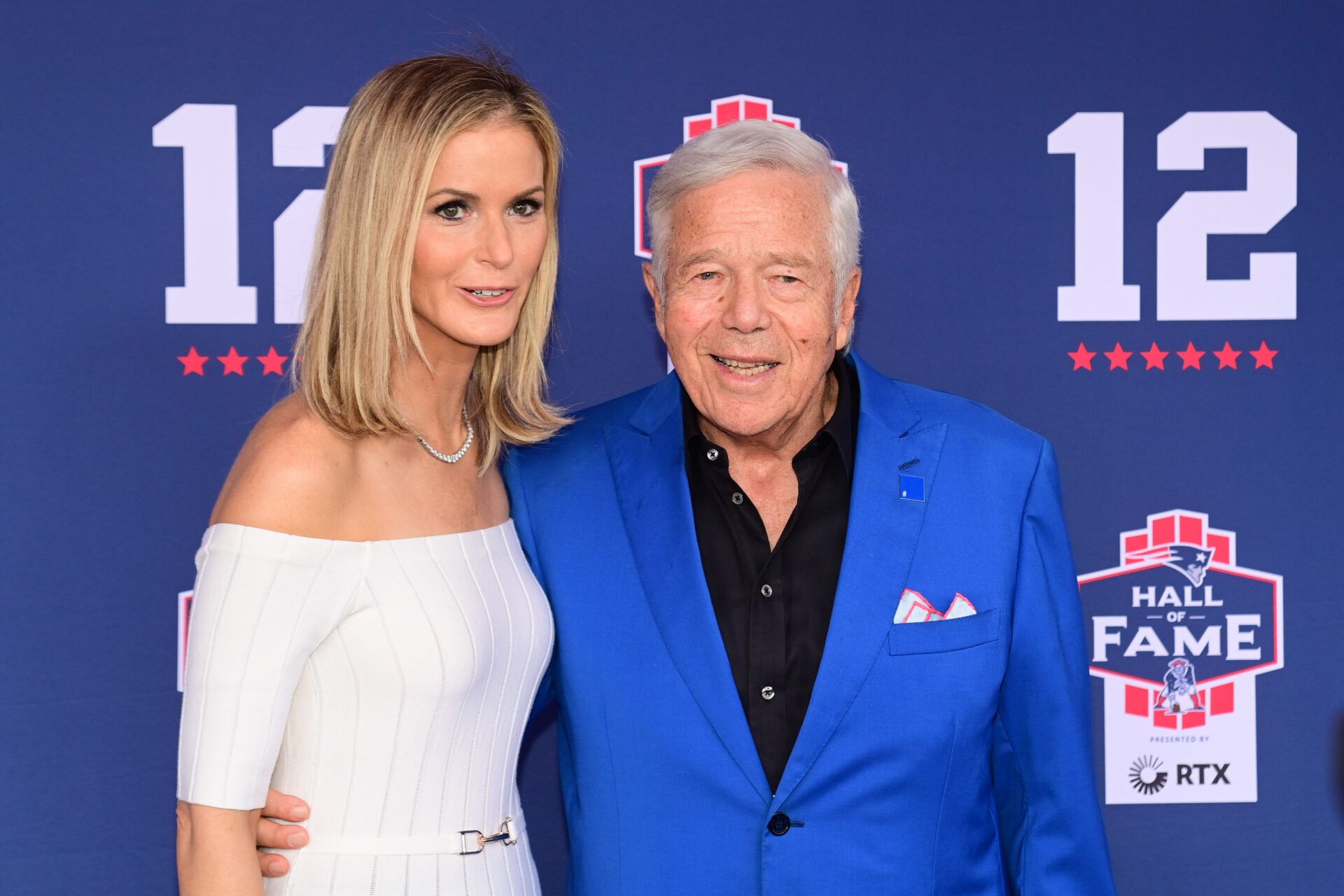
The league office, for its part, responded with a statement that attempts to balance calm and control. Commissioner Roger Goodell acknowledged receipt of the complaint and affirmed that the NFL would review the matter internally. However, league spokespeople stressed that Super Bowl officials are selected based on experience, performance, and merit, and that accusations of bribery or intentional bias are “extremely serious and require documentary evidence before any conclusions can be drawn.”
Kraft was not satisfied with reassurances. In subsequent interviews, he described what he saw as a pattern of decisions — certain penalties called, others ignored, crucial calls overturned at pivotal moments — that in his view could not reasonably be attributed to chance or human error alone.
It was one thing for a coach, player, or fan to debate a call on social media. It was quite another for one of the league’s most prominent owners, whose tenure includes a string of championship dynasties, to suggest inequity of this magnitude at the sport’s highest platform.
The backlash was immediate and complex. Patriots fans decried what they viewed as a miscarriage of justice, while rival supporters accused Kraft of deflecting blame for a loss rooted in performance. Some commentators warned that this moment could fracture the NFL’s fragile relationship with its audience, if fans began to believe that outcomes were influenced off the field rather than earned on it.
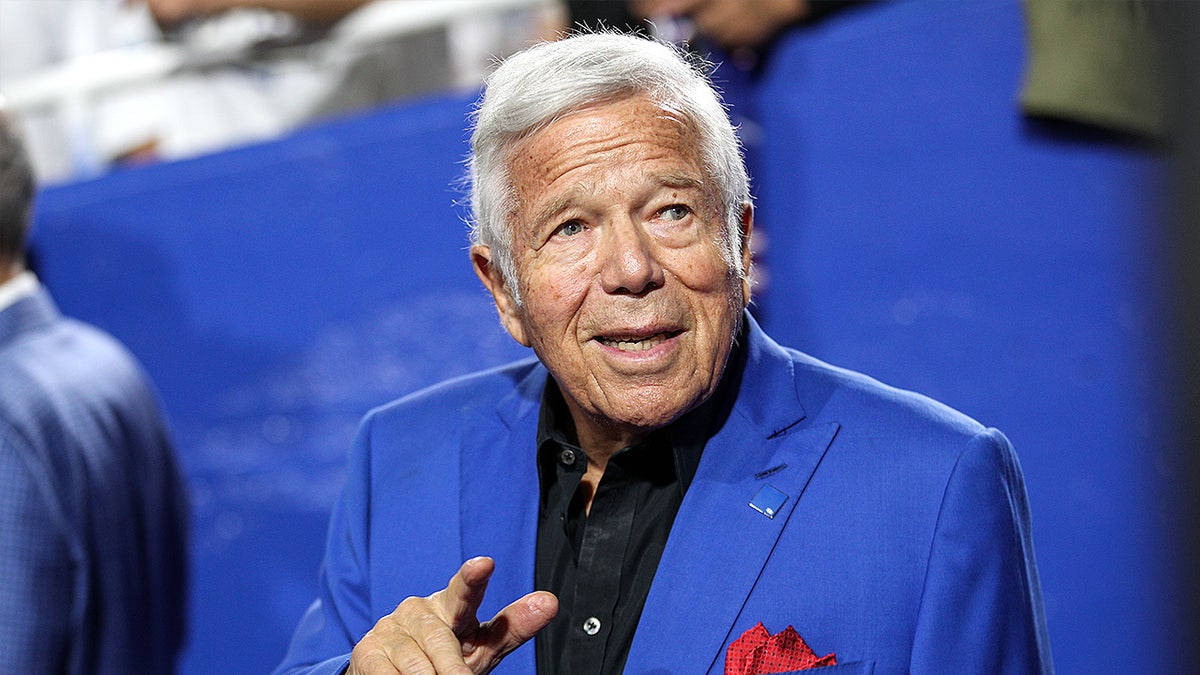
Others, notably those critical of officiating transparency in the NFL for years, seized the moment as a catalyst for change. They echoed calls for enhanced accountability, clearer replay protocols, and perhaps independent oversight — ideas that had long simmered below the surface of NFL discourse but rarely flared with such intensity.
Inside the Patriots’ locker room, players were reported to be both stunned and focused. Some expressed gratitude for Kraft’s support, interpreting his actions as a sign that the organization would fight for them. Others urged respect for the game and emphasized that the team’s effort deserved to be remembered for heart, grit, and execution, not controversy.
Coaches, meanwhile, maintained a more measured tone, emphasizing respect for the rules and acknowledging that in sports, outcomes are shaped by countless variables — talent, strategy, execution, and yes, human judgment.
Internationally, the story reverberated. The Super Bowl is not just an American spectacle; it is a global event. Debates over fairness, transparency, and governance in sports resonate in every corner of the world where competitive integrity matters.
If Kraft’s complaint has done one thing, it is force a reckoning: about how critical decisions are made, how they are communicated, and how deeply fans tie the idea of fairness to the meaning of sport itself.
Is this the end of tradition as we know it? Some proclaim it is a turning point, a moment that will be debated for years. Others insist that every game invites disagreement, and that nothing should overshadow the triumph of the Seahawks or the journey of the Patriots to reach the final.
But Robert Kraft’s actions have ensured that this Super Bowl will not be remembered merely as a loss or a win — it will be remembered as the moment when a franchise owner challenged the very mechanics of the game.
Love it or loathe it, this storm is just beginning.